

Joenja results
For children ages 4-11
Discover how Joenja was studied in children ages 4-11, and see results from the clinical trial.



Not an actual patient

How Joenja was studied in children 4-11 years of age

Duration
12 weeks

Population
21 participants

Age
4-11

Dosing
Joenja was administered twice a day, with doses ranging from 20 to 50 mg for 12 weeks

Conditions
The participants, sponsor staff, and trial staff knew what treatment each participant took
Joenja showed consistent improvements in lymph node reductions and meaningful improvements in B-cell function across all age groups
In this open-label study, Joenja results were compared to each child’s baseline measurements.
A reduction in lymph node size by week 12
- Lymph node size was measured for each person before and after treatment with Joenja to compare the reduction in size
- The results showed that the average size of lymph nodes decreased in children taking Joenja
Reduction of swollen lymph nodes at week 12
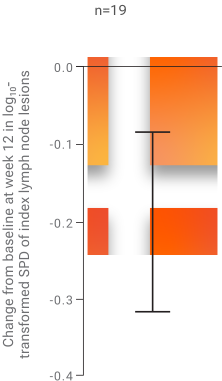
33.8%
mean reduction in swollen lymph nodes
This chart shows changes in lymph node size for 19 patients. On average, the lymph nodes got smaller. The shorter thin line in the middle of the orange bar shows the average. The longer thin line in the middle of the orange bar shows that results varied from person to person.
An increase in naïve B cells at 12 weeks
- Children in the clinical trial had their naïve B cells measured at 12 weeks
- A naïve B cell is a type of immune cell that has never been exposed to a foreign substance, such as a virus, bacteria, or other invaders
- The results showed an increase in naïve B cells with Joenja. An increase in naïve B cells can help the body fight infections
Increase in naïve B cells at week 12
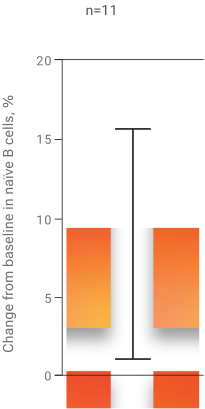
8.6%
mean increase in naїve B cells
The colored bar shows the average rise in naïve B cells after treatment. Because the bar goes up, it means patients generally had more naïve B cells. The thin line shows how much this varied from person to person.
Children 4-11 years old saw a decrease in spleen size at week 12 with Joenja
Decrease in spleen size at week 12*
- The spleen plays an important role in filtering out infections from our blood. When the spleen becomes enlarged, it may not function properly
- Reduction in spleen size was consistent across all age groups
Decrease in spleen size at week 12
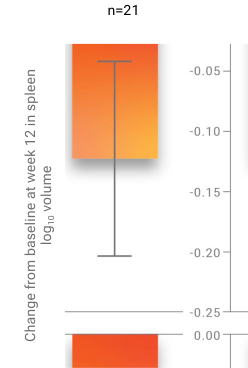
25%
mean reduction in spleen size*
The orange bar shows the decrease in spleen size for the 21 patients in the study, and the vertical line shows the different results each patient saw in their spleen size. Some patients saw a bigger reduction in their spleen size compared to others.
*
At week 12, mean spleen volume decreased to 176.60 cm3 from 236.30 cm3 (n=21).
Possible side effects of Joenja for children 4-11
If you have concerns or would like to know more about potential side effects, please talk with your doctor about Joenja.
The most common adverse reactions reported (>10%) were:

Headache

Cough

Skin rash

Vomiting

Diarrhea

Sinus infection
The safety results of Joenja for children 4 to 11 years old with APDS in the clinical trial were consistent with the safety results seen in the adolescent and adult clinical trial
APDS, activated PI3K delta syndrome; SPD, sum of product diameters.
Learn more about taking Joenja
→
Learn more about
APDS Assist
→
Right Circle
Left Circle